
Who Really Discovered America?
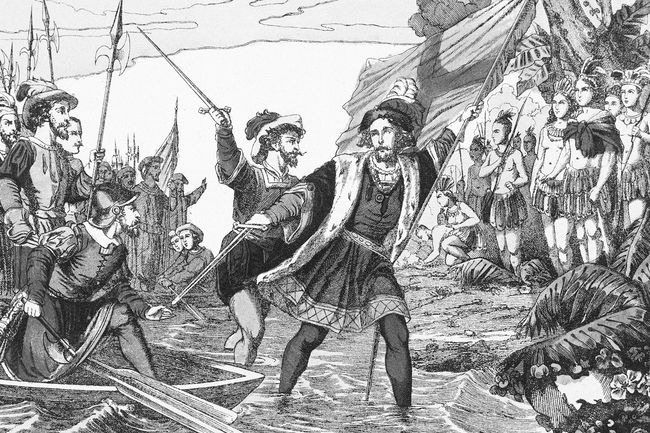
For a long time, America’s discovery was routinely attributed to Christopher Columbus and his voyage of 1492. But the real story of human arrival in the so-called New World is far more complex than that story would suggest, and spans thousands of years before European contact.
Indeed, the very question of who “discovered” America — and for the purpose of this article, we’re focusing on the North American continent specifically — depends largely on how we define “discovery” itself. Was it the first humans who migrated to this previously uninhabited land? The Indigenous peoples who built the first known complex societies on the continent? Or the various seafarers who made contact from distant shores?
This story of human discovery involves multiple waves of migration, exploration, and settlement, and it continues to evolve with further archaeological and historical research. So who really discovered North America? Let’s take a look, starting at the very beginning.
The First Humans on the Continent
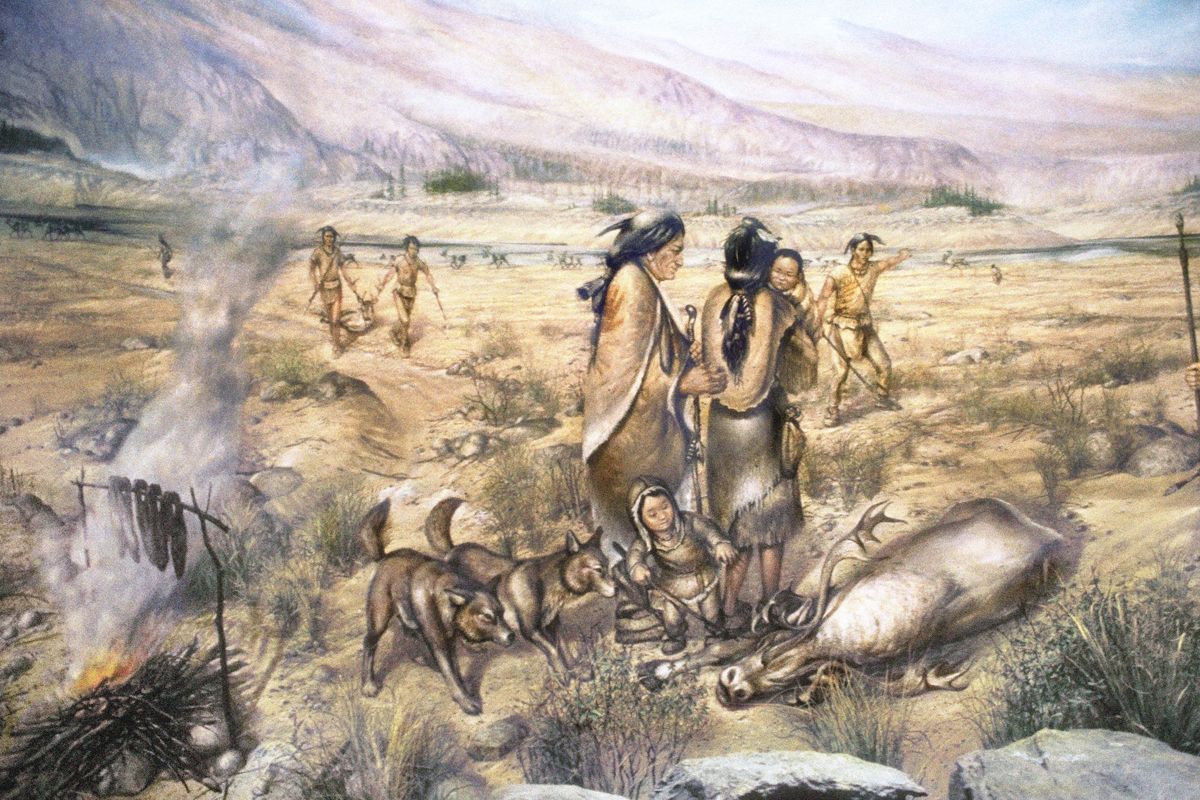
The very first humans emerged in Africa, and migrated from there to regions around the world. The exact date they first walked in the Americas is a long-standing open question, the answer to which continues to evolve as advances in archaeology and DNA analysis shed more light on the subject. During the second half of the 20th century, many archaeologists favored the “Clovis-first” theory, which argued that the prehistoric Clovis people were the first to reach the Americas, about 11,500 to 13,000 years ago. It was believed they crossed a land bridge — known as Beringia — linking Siberia to Alaska during the last ice age. This bridge then disappeared underwater as the ice melted, leaving the Clovis culture to roam North America — a land never before occupied by humankind.
More recent archaeological discoveries, however, have dramatically pushed back the timeline of human habitation on the continent. In 2021, archaeologists discovered human footprints in mud in what is now New Mexico, and dated the prints to between 21,000 and 23,000 years old. Research by an international team at the University of Oxford, meanwhile, suggests that the earliest humans arrived on the continent 30,000 years ago — and that rather than crossing a land bridge, they came by sea. The debate is ongoing, and tantalizing evidence of pre-Clovis cultures continues to be accumulated.

Indigenous Civilizations
By the time Columbus arrived, the Americas were home to thousands of distinct cultures. Estimates of the pre-Columbian population vary greatly, but there were likely between 5 million and 15 million Indigenous people living in North America in 1492. It’s important to note that these weren’t simply scattered tribes — many were sophisticated civilizations with monumental architecture, complex agricultural systems, and extensive trade networks. For example, Mesoamerica (modern-day southern Mexico and parts of Central America) was home to the Aztec and Maya civilizations. And farther north, the Ancestral Pueblo and Mississippian cultures thrived, among others.
These civilizations “discovered” America in the fullest sense: They knew the terrain, developed sustainable agricultural practices, and created complex societies with distinct cultural, artistic, and spiritual traditions. Of course, with the arrival of European explorers, many of these civilizations were decimated by war and disease.

Viking Explorations
Columbus has long been regarded as the first European explorer to sail to America, but even that is almost certainly untrue. Historians now believe the first known European contact with North America came nearly 500 years before the Italian explorer’s arrival. Norse sagas — which describe a distant land called Vinland — have long hinted at possible Viking voyages to North America, but it was only in 1960 that physical evidence was found at the L’Anse aux Meadows archaeological site on the northernmost tip of Newfoundland, Canada.
There, excavators unearthed artifacts similar to others found at sites in Iceland and Greenland, leading them to identify the site as Norse. Dating techniques later provided evidence that Vikings had occupied the area around 1021 CE. Evidence also suggests that L’Anse aux Meadows was a base camp from which the Vikings explored other locations, including regions farther south. To date, it remains the only confirmed Norse site in North America. And while the Norse presence was possibly brief, there’s a strong argument for Vikings being the first Europeans to explore North America.

Other Cultures That Reached America
Several other cultures have legends about arriving in America before Columbus, though many of these are fanciful and have no supporting evidence. In Ireland, you might hear of St. Brendan, who supposedly sailed to America in the sixth century in a curragh — a small, open vessel made of a wooden frame covered by ox hide and waterproofed with tar (a vessel entirely inappropriate for crossing the Atlantic Ocean). Meanwhile, according to Welsh legend, Madog ab Owain Gwynedd made the trip to Mobile, Alabama, sometime around 1170, and in Scotland there’s the story of Henry Sinclair, a nobleman who allegedly sailed to Greenland and then North America, arriving in Westford, Massachusetts, in 1398. It’s fairly safe to say that none of these legendary voyages of discovery is true.
A more persuasive case can be made for Polynesian voyagers making early contact with the New World, although via South America, not North America. Genetic analysis shows that Pacific Islanders and South Americans interacted two centuries before Europeans arrived in South America, perhaps some 800 years ago. This could have been through Polynesians arriving in South America, or South Americans (perhaps from coastal Ecuador or Colombia) sailing to East Polynesia. Further archaeological and DNA analysis might well shed more light on these interactions.
As things currently stand, it’s safe to say that Columbus didn’t “discover” America — the Vikings got there first, at least where Europeans are concerned. And, as we know, the continent was already inhabited long before them. What Columbus did do was initiate sustained contact between the Old World and the New World — what historians call the “Columbian Exchange” — leading to a permanent European presence in the Americas, and the years of conquest, colonization, and cultural exchange that followed.