
How the Post Office Created the Zip Code
Even with the decline of letter writing in the digital age, the ZIP code remains an American institution, a neat five-digit number that caps an address and, like an area code, can serve as a point of pride and prestige.
Given the ZIP code’s place as an oft-used and universally recognized symbol, it may come as a surprise that the ZIP, short for “Zone Improvement Plan,” isn’t all that old. The system was enacted on July 1, 1963, within many of our lifetimes and just a few months before another famous entity, the Beatles, also arrived in the United States.
But unlike the mop-topped quartet, the five-digit zoning plan wasn’t immediately welcomed by Americans. Here’s a look at how the ZIP code came to be, and ultimately overcame a bumpy start to emerge as a signature accomplishment of the United States Postal Service.

An Early Zoning System Came Out of World War II
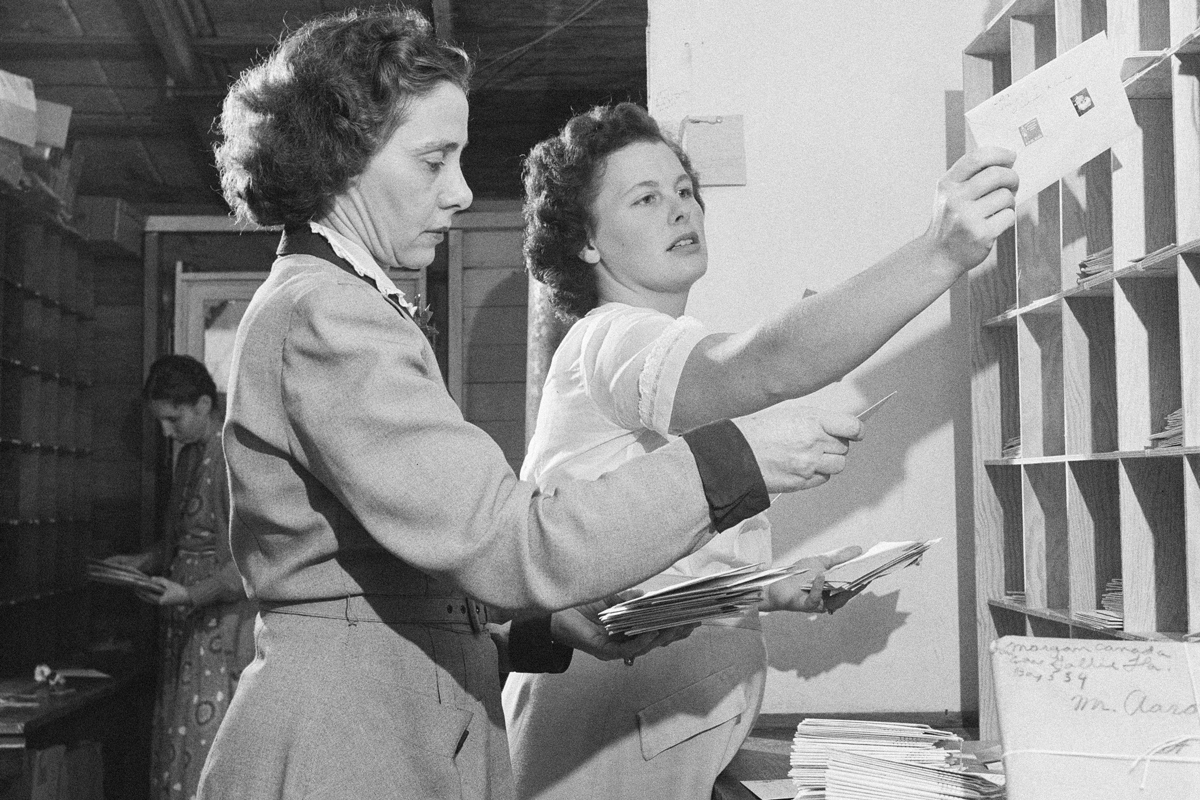
Like many innovations, the ZIP code’s origins can be traced back to World War II. At the time, the Post Office Department, as the U.S. Postal Service was then called, was dealing with the loss of personnel to military duty, specifically the departure of experienced sorters who could properly funnel letters and parcels marked with incomplete addresses.
As a result, in 1943, the department assigned one- to two-digit zone numbers to more than 100 high-density urban areas across the country to help make sorting for these areas more efficient. The numbers were to be written on the address of the recipient after the city name, such as “Indianapolis 24, Indiana.”
Although the zone numbers provided some organizational relief, they only papered over the problem of keeping up with the ever-growing volume of mail. Fueled by the country’s postwar population and economic boom, the number of individual pieces of mail jumped from 33 billion in 1943 to 66.5 billion in 1962. By the latter date, a letter was handled by an average of eight to 10 postal employees, increasing the possibility of human error.
The issue wasn’t going unnoticed by the department’s employees. In 1944, a prescient postal instructor named Robert Moon sought to get ahead of the volume problem with his proposal of splitting the country into a network of regional processing centers, each marked by a three-digit code. Nine years later, another inspector, H. Bentley Hahn, completed a six-year study of the department’s outdated operations with a report titled “Proposed Reorganization of the Field Postal Service.”
But despite the modernization efforts of Postmaster General Arthur Summerfield, who introduced the country’s first automated post office in Providence, Rhode Island, in 1960, the department was still struggling to meaningfully address its problems as it faced down a new decade.
The Zone Improvement Plan Is Born
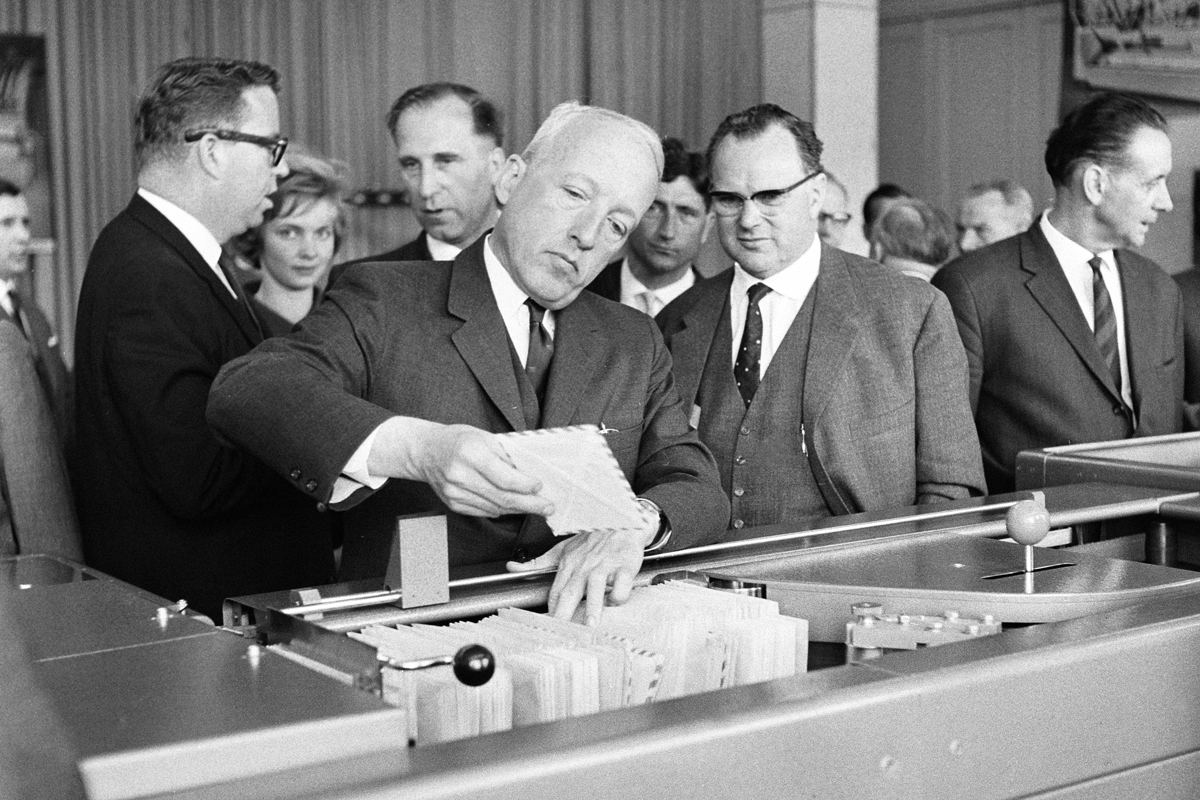
The tide turned in the early 1960s with the appointment of Postmaster General J. Edward Day, who saw in Moon's long-overlooked proposal and the newly implemented West German postal code system a solution for improving delivery speed and eliminating backlog.
Under the new regime, the department devised a five-digit code that built on Moon's idea of regional processing centers to create a national network of delivery zones. The first digit of the new code denoted one of 10 large geographical regions of the country, in most cases encompassing several states. The second digit signified a smaller division within each region, which included either multiple states, one state, or a portion of a heavily populated state.
The third digit represented either a large city post office or a designated regional center within reach of urban centers and more remote outposts. The final two digits, which incorporated the 20-year-old zone numbers already in place, marked either a division of a big city post office or a smaller one directly served from a regional center.
Hahn, who helped devise the numerical system, was also tasked with helping to explain the finer details of the process in late 1962, before the plan’s official launch. Meanwhile, it was another executive, D. Jamison Cain, who conceived the acronym-friendly name of Zone Improvement Plan, as well as the ideal mascot to deliver the message to the public.
A Mascot Named "Mr. ZIP" Promoted the New System
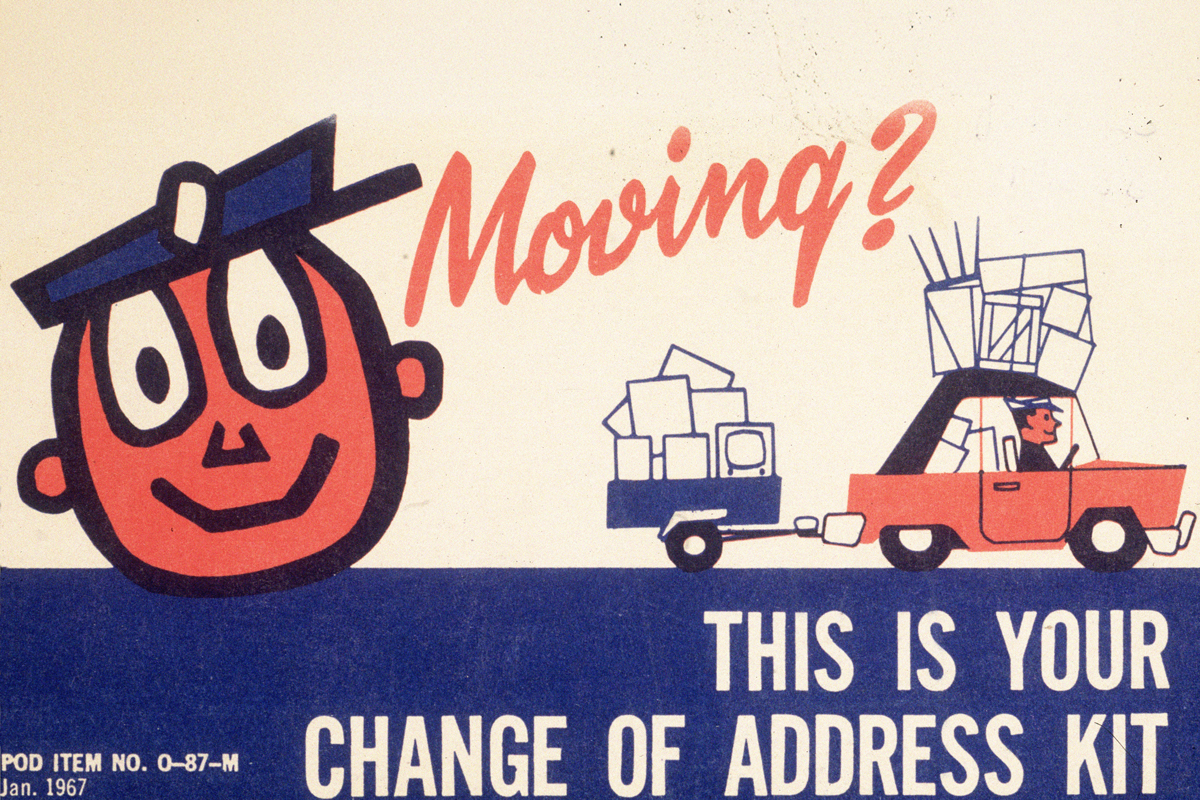
In the 1950s, the Cunningham and Walsh advertising agency designed a smiling cartoon mailman for a Chase Manhattan Bank mail campaign. The logo was acquired by AT&T and then the Post Office Department, where it was rechristened as "Mr. ZIP" and designated as the face of the department's new promotional push.
With the arrival of the ZIP code on July 1, 1963, the image of Mr. ZIP was plastered across post offices, mail trucks, brochures, and buttons worn by mail carriers as part of efforts to urge the public to include the five digits on all outgoing mail. He also appeared in a commercial that featured the voice of Broadway star Ethel Merman singing about the joys of the ZIP code to the tune of "Zip-a-Dee-Doo-Dah."
Despite the ubiquitous presence of the friendly mascot, there was some built-in resistance to adopting the new code. This was in part due to other recent widespread changes foisted on the public, including Social Security numbers being required for individual tax returns and phone numbers changing from the old alphanumeric system to all numerals. Bulk mailers also objected to ZIP code implementation, which required the investment of time and money to update their Automatic Data Processing equipment.
The ZIP Code Was Widely Accepted by the End of the 1960s
The bulk mailers were forced to go with the flow via congressional enforcement, and the rest of the public soon got used to writing out the five-digit code thanks to persistent reminders from Mr. ZIP. According to a 1969 survey, some 83% of Americans were using ZIP codes by that time, while 90% believed the system to be a good idea.
Additionally, the ZIP code’s reach was already extending beyond the Post Office Department. The five digits became a focus of marketing companies, insurance firms, and the U.S. Census Bureau, all of which found the system beneficial to supplying more targeted data.
The Beatles had broken up by the time the Post Office Department reconfigured itself as the USPS in 1971, but the ZIP code was still going strong, the formidable five-digit system outlasting even the Fab Four as an enduring and thriving symbol of 1960s ingenuity.